Dry Swale Regraded and Check Dams Reinstalled in New Kent County
Dry swales don't last forever without upkeep. Over time, the grade shifts, sediment builds up, and the check dams that slow water flow can work themselves loose or get knocked out of position. When that happens, the whole system starts working against you - water moves too fast, erosion picks up, and the swale loses its ability to do its job.
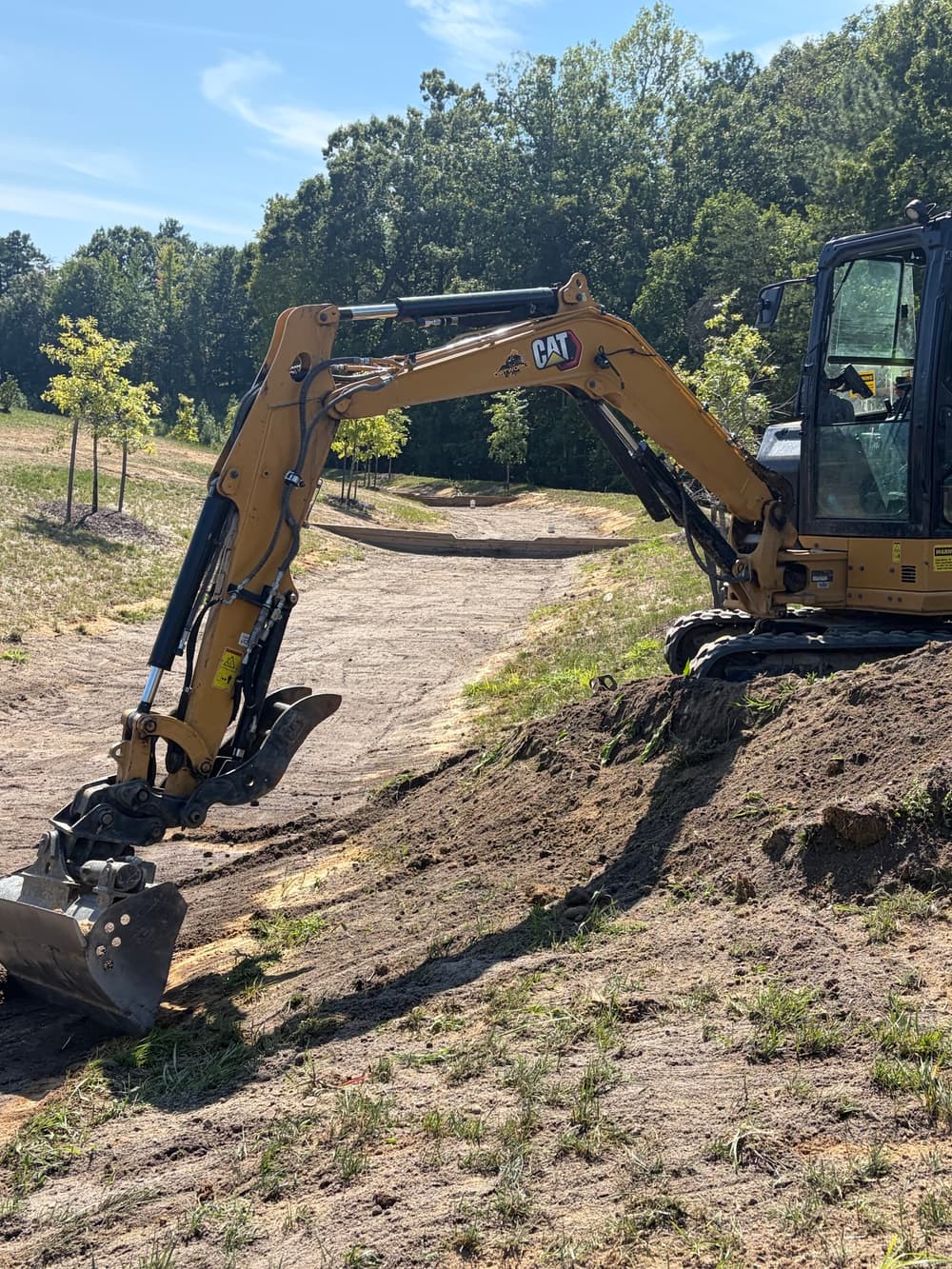
That's exactly what we were dealing with here in New Kent County. The swale had lost its proper grade and the check dams needed to come out, get reset, and be reinstalled correctly. We brought in the CAT mini excavator to regrade the channel and get everything back to where it needed to be. Precision matters on a job like this - too steep and water accelerates, too flat and it ponds where it shouldn't.
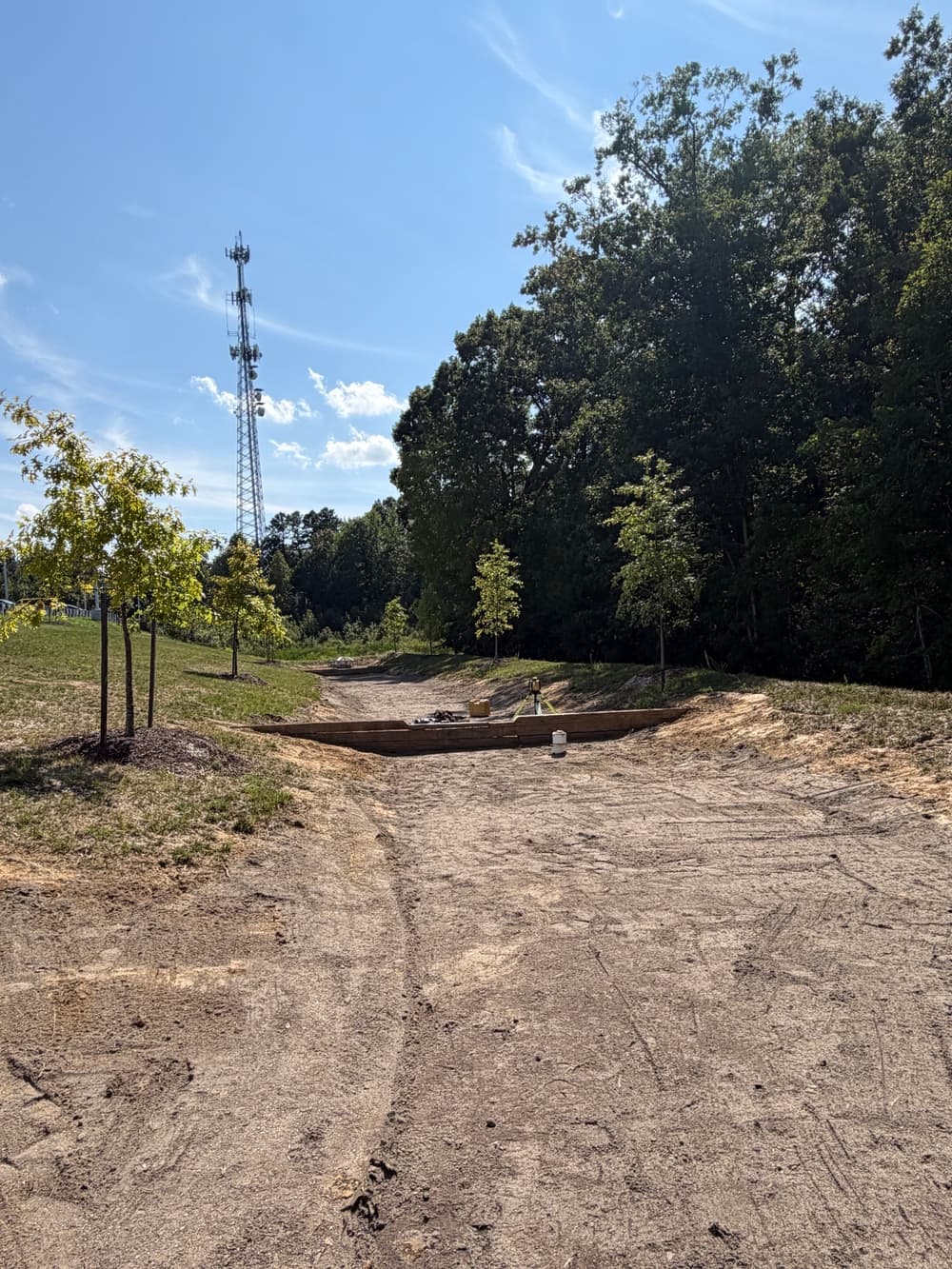
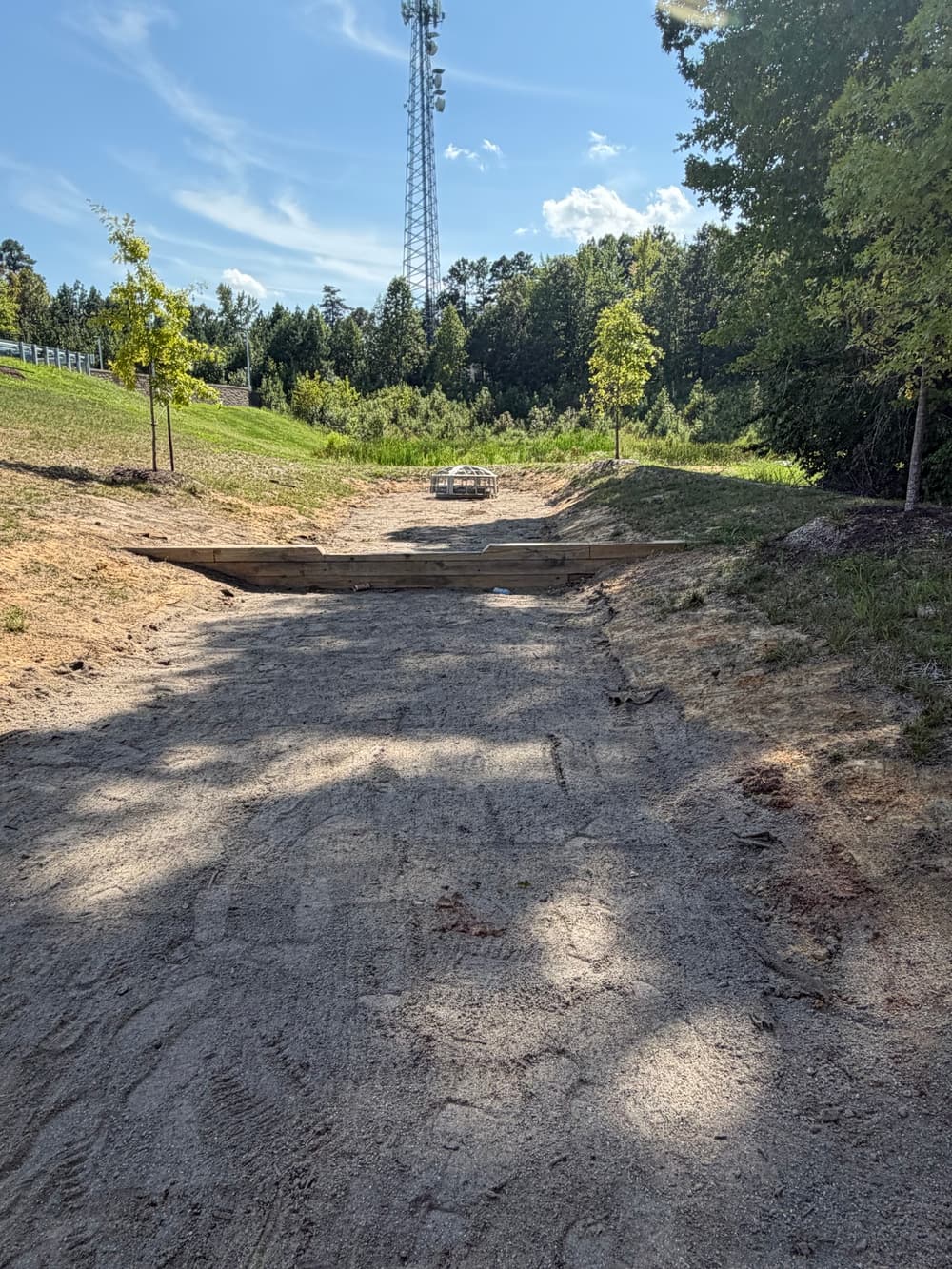
Check dams are simple in concept but critical in practice. They're designed to slow water down as it moves through the swale, giving it time to infiltrate and reducing the velocity that causes erosion along the channel walls and floor. You can see the timber check dams reinstalled and seated flush across the swale - level, tight, and ready to handle runoff the right way.
Regrading the channel itself is just as important as the check dams. The swale floor was cut back to a clean, consistent grade so water has a controlled path to follow. Without that, even a brand new check dam can't compensate for a channel that's directing flow the wrong way. Getting both right - grade and structure - is what makes a stormwater system actually perform.
This kind of maintenance work doesn't always get attention, but it protects a lot more than just the swale. A functioning drainage system keeps soil in place, protects nearby vegetation, and prevents bigger erosion problems from developing on the surrounding slopes. Catching it early and doing it right saves a lot of headache down the road.